Thursday, December 27, 2012

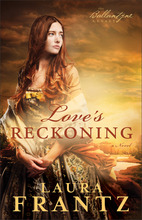
"Love's Reckoning" by Laura Frantz, an Epic Tale of God's Faithfulness

Love's ReckoningOne of my favorite aspects of Laura Frantz's novels is her tendency toward epics - the novels span years, not just a couple weeks, and they depict lesser-known parts of American history, with good looks at the ugly as well as the beautiful.  It's not just a story of the romance between two people - yes, there is love, but it is the story of their lives and hardships through which they persevere.  She takes the time to develop the story and doesn't rush through it, while at the same time she never lets dullness take root. 

Unlike her three novels set in American Revolution Kentucky, Love's Reckoning is in post-American Revolution Pennsylvania, when even western Pennsylvania is growing increasingly civilized.  However, old British traditions still cling, and the consequences of breaking the traditions can be weighty.  As an apprentice, Silas Ballantyne in unknowingly caught up in the tradition of marrying the master's daughter, which he eventually discovers will determine whether his apprenticeship is completed or broken and unable to be resumed.  While he knows which daughter he would prefer to marry, he refuses to be forced into the marriage when his dreams lie further west, where he can make something of himself besides merely a poor blacksmith. 

As a daughter, Eden is only a tool in the hands of her father - to be used to keep a tidy house and to be given in marriage to cement an alliance.  She dreads the possibility that the new apprentice will have to marry her rather than her sister, and then she dreads her fate when her father starts making plans for a different husband.  Her only hope of escaping her mother's fate - married to a man she doesn't love, abused, and over-worked - is to leave home entirely and seek a position in Philadelphia, hopefully escaping before she gets caught. 

With God's grace, plans change and love blossoms, but Eden's spiteful sister and the once-brotherly neighbor intervene to rend them apart.  Only after seemingly eons of hard work and growth do they finally reconcile the past and gain hope for the future. 

Why, when they are so close to happiness, does her shame, his pride, and so much tragedy separate them?  And yet, in spite of their mistakes and the overwhelming circumstances, God does not abandon them; He remains faithful, even as they doubt His goodness.  They come back to rely on Him and He blesses them, first separately and then by bringing them back together.  As Frantz quotes Comte du Buffon, "Never think that God's delays are God's denials" (329).    He always remains faithful, even in greatest hardship - after all, His own son went through the very worst so that we shall never be separated from Him.  He says, "For I know the thoughts I have think toward you - thoughts of good and not of evil, to give you a future and a hope."  (Jeremiah 29:11). 

Ballantyne Legacy:
1. Love's Reckoning
2. Love's Awakening
3. Love's Fortune 

Friday, December 21, 2012

"A Change of Fortune" by Jen Turano - clean and hilarious!

A Change of FortuneJen Turano's novel A Change of Fortune is incredibly funny - it is not often that I laugh out loud while reading, but there were many times that I could not help it.  It is undeniably a romantic comedy, and not one that relies on sexual humor or hideously embarrassing situations, though Lady Eliza is more than capable of getting herself into a scrape.  Thankfully Turano imparts the humor without the acute embarrassment. 

It is a great clean book - not even a kiss until the wedding!  It's so rare to see relationships develop in books without all that physical tension - "He kissed me - does this me he loves me?"  "Why would she kiss like that if she had no intention of marrying me?"  In this novel, there is still definite tension between Hamilton and Eliza, but the romance is not super physically intense or overpoweringly mushy.  It is still lively and great for this level of comedy.

As a Christian romantic comedy, A Change of Fortune does tie in a relationship with God - more in the end than the beginning, but neither Eliza nor Hamilton is exactly relying on Jesus at the start.  I get the impression they are simply angry at first and not so much disbelieving, but they learn trust in the end - both in God and each other.  Turano does not delve as deep as other authors, but her novel still makes a point that God can and will take very difficult situations and turn them to the better. 

I received a free copy from Bethany House for the purpose of this review; I was not required to write a positive review. 

I highly recommend reading the entire Ladies of Distinction series:
1. A Change of Fortune
2. A Most Peculiar Circumstance
3. A Talent for Trouble 
4. A Match of Wits

Friday, November 9, 2012

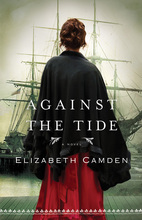
Addicted to Elizabeth Camden's "Against the Tide"

Against the TideElizabeth Camden's Against the Tide is an excellent sequel to her earlier novel, The Lady of Bolton Hill.  In some ways, the two novels are primarily about Alexander Banebridge - though he was the villain of Lady, it was the story of how he came to Christ, and Tide shows us where he went from there, tying up loose ends and taking out the real villain. 

Camden's hero and heroine are good, strong characters, but they have their weaknesses, making them real.  Bane suffers from an obsession with rooting out opium smugglers, specifically the man who formerly controlled him, but to the point where his noble intentions almost entirely deprive him of love and friendship, since whoever he cares for could be taken and used against him by the Professor.  1st John 4:18 specifically states that "There is no fear in love."  Lydia feels the need to control her small, concise, and well-ordered world; besides which, she is addicted to opium and refuses to acknowledge its hold on her. 

Lydia's salvation is a good reminder that not everyone has such a quick, dramatic conversion as Bane himself did, like Saul (who became the apostle Paul), or the wicked king Manassah.  As Bane says, "Don't be like the person who tears the scab off the wound every morning to see if has healed.  Just keep seeking and trusting." (341).  It takes time to reach the point of complete trust.  One thing I would have liked to see more of in the novel was trust on Bain's part - namely, trust in God to see things through, not just reliance on himself. 

While The Lady of Bolton Hill is an introduction to opium issues in America, Against the Tide makes it personal, as one of the main characters is an unsuspecting addict.  Even when confronted with the addiction, she is quick to claim it as only an occasional cure against a headache, not a real addiction.  How many addictions do we deal with, but daily deny?  Not all are technically harmful to one's physical health - computer games, reading too many books, watching too many movies.  But what about turning to food to make one feel better, or to men?  It's so easy to rely on men for feelings of self worth.  Like Lydia, we think, "It's not an addiction, I can quit any time," but really, can we?  And what if we try to replace it with something else - switch from masculine attention to chocolate?  That is no good either!  Replacing one addiction with another is not the solution, but replacing the addiction with God is.  The moments you want to fall back on that old habit, don't!  Spend that time with Him!


Overall, I found it to be an excellent book, and I give the novel five stars (and, incidentally, it happens to be the Christy Awards winner for Best Historical Romance for 2013).  Bethany House Publishers provided a free copy of this novel for an honest review as part of their book review program; I was not obligated to make it a positive one. 

Sunday, September 30, 2012

The Revolutionary War through Laura Frantz's Novels

When you think of the Revolutionary War, what comes to mind?  The Tea Tax, the Stamp Act, Thomas Paine's Common Sense, Paul Revere's famous cry, "The British are coming!"  However, that is only a small part of life in the American Colonies during the war.  Laura Frantz's first three novels, each set in the Kentucky territory, paint a very different picture from the dumping of the tea and George Washington crossing the Delaware, which we learned in school.  What we rarely remember, or perhaps never learned, is that there was more than just one war being fought.  Yes, the Red Coats were the main enemy, but how many men, women, and children died on the frontier from wars with the Shawnee, Cherokee, and other native tribes?  We remember the French and Indian War for the battles with the American Indians, not the Revolutionary War - but battle them we still did. 

The Frontiersman's DaughterThe Frontiersman's Daughter  is an epic novel of a girl born and raised in Kentucky, who has a rare chance to live in tenuous peace with both the whites and Shawnee.  Others on the frontier are less lucky - homes burned out, families massacred, forts attacked - yet she lives nearly wild, courted by Shawnee, frontiersman, and gentleman alike.  The novel focuses on the simple life of those who were brave enough to make their homes on the wild frontier. 

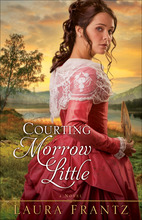
Courting Morrow LittleIn Courting Morrow Little, Frantz looks closer at the war between the Blue Coats (Americans) and native tribes, and how the Americans broke many treaties without punishment in order to destroy as many of the Native Americans as possible.  As experienced through Morrow Little's eyes, this novel shows the unfairness to the Indians by many of the Americans in their war to take control of the country, and the unfairness to any white person who would live with them (for they surely must be either a traitor or a captive held against their will). 

The Colonel's LadyAlmost as a response to Courting Morrow Little, but on the other side of the conflict, The Colonel's Lady looks at life on a frontier military fort as they battle the British and Indians.  Many of the Native Americans had, in conjunction with the loss of their homes and territory, been incited by the British to fight the people living on the frontier.  Much like in the French and Indian War, the British made promises so that the Native Americans would fight for them, though against the colonial Americans now rather than the French.  The novel also looks at the dismal existence as a soldier, where alcohol was one of the few ways to escape from the pain of injuries, dysentery, and loss of friends in the many skirmishes of the war, and where desertion and suicide were the main alternatives. 

One thread that holds these books together, though, is God's love and forgiveness for any and all people - whether a simple frontiersman's daughter and gentleman doctor, a lady who chooses life with a half-breed over the whites, or a spinster and an officer in the Rebel army.  While the boundaries of who is right and who is wrong are brought into question in these novels, God's love and control are not; He is the bedrock that cannot be moved, and it is His desire that none should be lost. 

Thursday, September 13, 2012

When I am Weak, He is Strong

Being ill for three weeks can really bring a person low.  When no one is really sure what it is, and nothing is curing it, it seems even worse.  And it's even worse yet when it comes on two days after a lovely afternoon devoted entirely to spending time with God - tea and a picnic with a place for Him, painting the dragonflies He provided for entertainment, His Word for some spiritual bread; but mostly, spending time knowing He was there enjoying it with me. 

Thankfully Jesus came to heal and to save, and to be our strength in time of need.  After eight days of fairly high fever (102's), and even a foray into the 103's, plus eventually a cough, I went in to a clinic and was diagnosed with probably an upper respiratory virus, even though the temps were on the high side for a virus.  A couple days later I came down with an extremely painful throat, so on day 13 I was in again for strep test, which, to the great surprise of the nurse practitioner, came out positive.  Thus I was prescribed amoxicillin to take care of it.  It didn't.  At this point, it was a question of, "God?  Can I please be well?  It's up to You, since nothing is working!"

 Well, He didn't just fix me, but He has given me wise friends who know more of infections than I do, and when I began coughing out orange and brown sputum, my friend in med school sent me in to Urgent Care.  It was something of a fiasco, but I did see a doctor in the end, and he diagnosed me with a lower respiratory infection of Streptococcus pneumoniae.  This is not to be confused with the Strep A that causes Strep throat; this is far worse.  It can easily lead to pneumonia, and it is the leading cause of bacterial meningitis, among other nasty problems.  It's not something you want infecting your body.  But the doc prescribed the super antibiotics, and God has see fit to take care of my infection through that. 

Throughout the 21-day illness, I had to rely on God for getting things done (and for making sure my husband picked up the right groceries and did what I needed him to), and I had to rely on Him for comfort in my distress of an extremely painful throat and high fevers.  Even for keeping the first round of antibiotics down, when they wanted terribly to come back out of my stomach in the middle of the night.  And He was faithful.

It makes sense to me that it was an attack, pure and simple: the devil does not like us to spend time improving our relationship with Jesus.  He'd much rather we be too busy.  I admit during the illness I was not up to reading my bible as faithfully, and my prayers were pretty centered on "help me feel better, please," but God remains faithful through it all, and He continues to bless us for our love. 

"Therefore I take pleasure in infirmities, in reproaches, in needs, in persecutions, in distresses, for Christ's sake.  For when I am weak, then I am strong."  2nd Corinthians 12:10

Focusing on Family: A Review of Mary Connealy's "Over the Edge"

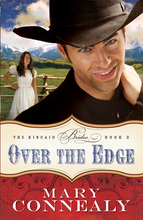
Mary Connealy's third and final book of the Kincaid Brides, Over the Edge, thoroughly concludes the series with her usual comedic flair.  

Over the Edge The first two novels, Out of Control and In Too Deep tell the stories of the two older Kincaid boys, Rafe and Ethan, and highlight their views of an accident from their youth that changed their lives forever.  Now in Over the Edge we finally get Seth's take on what happened that night in the cave, when the floor collapsed and burning kerosene fell on Seth, burning him badly and causing him to go a little crazy.  His experiences in the Civil War were no help to his sanity, and he does not remember getting married near the end of the war.  However, his bride and 8-month-old son show up at the start of the novel, beginning Seth's war to reclaim his memory and sanity.

As with her other novels, the romance between the main characters was laced with humorous situations and tenderness, for all that the bride was angry enough to take shots at her errant husband. 

Family, throughout the whole series, seemed to be a major theme, but it was most prominent in Over the Edge.  Connealy surprised me in an unexpected plot twist - the existence of a fourth Kincaid boy - and all four of them must work together in the novel to accept and forgive themselves and their father, who had started another family while still married to the three boys' mother.  Each has spent years believing himself responsible for the collapse of their family, and they truly need God's strength and each others' support to work through this unexpected turn.  The youngest, Heath, also needs help learning to forgive his older brothers for being part of the other family and to learn how take comfort in them and to be a real family with them. 

It's a great, light romantic comedy and fitting conclusion to the series, but it lacks some of the depth of novels by other authors.  It's still a great read and I highly recommend it, but be sure to read the first two first!  Here is a link to a trailer for the novel:

http://www.youtube.com/watch?v=HeSzqacHzQM&list=UUOTCh77FT1ZAyg-Mrj97HWw&index=2&feature=plcp

0.5: "Closer than Brothers: Surviving Andersonville" (a related prequel)

Kincaid Brides
1. Out of Control
2. In Too Deep
3. Over the Edge 

"Runaway Bride" (follows Trouble in Texas and Kincaid Brides series; from the novella collection With This Ring?)

Cimmaron Legacy
0.5 "The Boden Birthright"
1. No Way Up
2. Long Time Gone
3. Too Far Down

"The Tangled Ties that Bind" (follows Trouble in Texas and Kincaid Brides series; from the novella collection Hearts Entwined)

This review is an honest opinion, written for Bethany House Publishers as part of their book review program, and I was in no way obligated to write a positive review. 

Friday, August 10, 2012

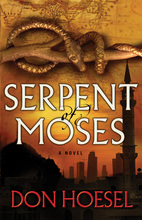
Don Hoesel's "Serpent of Moses"

Serpent of MosesIn the book of Numbers, as the Israelites were wandering in wilderness after rejecting the promised land, they became discouraged and spoke against God, who had freed them from slavery in Egypt and performed many miracles to keep them safe and whole.  In response to their hardheartedness, God plagued them with fiery serpents, which were killing them left and right.  When the people recognized their sin, and asked Moses to pray for them, God responded with a cure:  Moses was to commission a fiery serpent, made of bronze, and lift it high on a pole--then any who looked to the serpent would be cured.  Later, in the time of the kings, people worshiped the bronze serpent, called Nehushtan, and King Hezekiah ordered its destruction. 

However, according to Don Hoesel, it may not have been as thoroughly "broken into pieces" as the bible implies. 

Don Hoesel's timing in his novel, Serpent of Moses, is superb, reading like an adventure movie.  The reader is instantly dropped into the action - almost like a prologue, the Libyans first encounter mysterious Israelis and an archaeologist in the initial, unsuccessful attempt to recover the bronze serpent, but the suspicious foreigners are killed before the Libyans can interrogate them and discover their interest in the area.  [Were it a film, insert credits here].  The next scene, occurring two weeks later, introduces our hero, archaeologist Jack Hawthorne, dodging bullets in a narrow tunnel, running for his life.

He and Indiana Jones could really swap some stories.

Interspersed between Jack's close calls, captures, and escapes while trying to hang on to the archaeological artifact are the journeys of his friends who are trying to locate him and extract him from whatever trouble into which he has dropped himself.   As they solve the clues that brought him to where he is, the reader learns how Jack found the serpent in the first place, while providing his friends with the clues to the other missing piece of the serpent--something Jack is desperately going to need, if he and his friends are to have any hope of surviving this adventure.

Hoesel's novel is well-written and fast-paced, much like an adventure film.  It even has little bits of humor that often make adventures so appealing--our hero, though typically able to hold his own or outsmart the antagonists, ends up with a vision of Imolene's massive fist as the last thing he sees on several occasions. 


Hoesel's story clearly follows a previous novel, Elijah's Bones, and I believe it would be better to read them in order, but Serpent of Moses still makes sense without the first.  It just leaves one hungering to find out what precisely did happen in Australia that changed their lives so thoroughly . . .   My understanding is that Jack's spiritual state undergoes a major transformation in the first book, but Hoesel does not delve too deeply in this novel.  It is clear that Jack is still working out the details of his spiritual life--and maybe he doesn't have a personal relationship with Jesus yet--but he clearly recognizes the bible as truth.  I hope that subsequent novels will further his spiritual journey, as I at least am not completely satisfied with where he seems to be right now. 

Overall I very much enjoyed the book, but I would have liked to see more conclusion to the novel; it ended rather quickly.  **SPOILERS**  Were the Libyans all killed in the final skirmish?  Were the good guys really the only ones left standing after the Israelis departed?  It was a little unclear, but I have difficulty in believing that were any Libyans still alive, they'd have let them go so easily.  This is where a movie could clearly show the decimation in a 2-3 second shot! 

I received a free copy of this novel from Bethany House Publishers as part of their book review program, and I am under no obligation to write a positive review.