Wednesday, September 4, 2013

Christian WWII Books and Authors


Having been on a bit of a WWII kick lately, I felt like compiling a selection of Christian WWII fiction.  Just so you know, there's a lot more out there than I thought!  I severely doubt this is a comprehensive list, but I have tried to be thorough as possible.

A Woman's Place* indicates I have read it

Lynn Austin

A Woman's Place (2006)*
While We're Far Apart (2010)

Austin's works describe life on the Home Front for women, children, and men whose loved ones have joined the war.

Kate Breslin
Thief of Glory   -     By: Sigmund Brouwer
For Such a Time (2014)*

A retelling of Esther, focusing on a Czechoslovakian transit camp

Sigmund Brouwer
Thief of Glory (2014)*
A gritty novel in the Pacific, in a Japanese internment camp


Kristy Cambron
Hidden Masterpiece
1. The Butterfly and the Violin (2014)*
2. A Sparrow in Terezin (2015)*
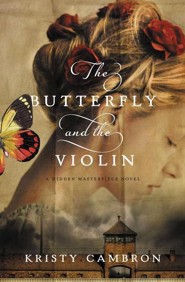
The Butterfly and the Violin, Hidden Masterpiece Series #1   -     By: Kristy Cambron
The present and the past intertwine in these books which take place both in WWII and the present.

Jack Cavanaugh
Songs in the Night
1. While Mortals Sleep (2001)
2. His Watchful Eye (2002)
3. Above All Earthly Powers (2004)

Eva Marie Everson
The One True Love of Alice-Ann (2017)*
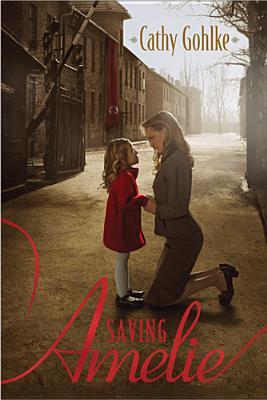
Saving Amelie
Cathy Gohlke
Saving Amelie (2014)*
Secrets She Kept (2015)*
Until We Find Home (2018)*

Gohlke specializes in profound stories of Europe's role in the war--the beautiful, the ugly, the praiseworthy, the unspeakable--and wraps them in compelling narratives that shine God's truth from a dark place.

Tricia Goyer
WWII Liberators
Songbird Under a German MoonFrom Dust and Ashes: A Story of Liberation (2003)
Night Song: A Story of Sacrifice (2004)
Dawn of a Thousand Nights: A Story of Honor (2005)
Arms of Deliverance: A Story of Promise (2006)

Love Finds You in Victory Heights, Washington (2010)

Songbird Under a German Moon (2010) (Post-WWII Germany)

The London Chronicles
1. A Secret Courage (2017)*
2. A Daring Escape (2018)

Tricia Goyer and Mike Yorkey 
The Swiss Courier (2009)*
Chasing Mona Lisa (2012)*
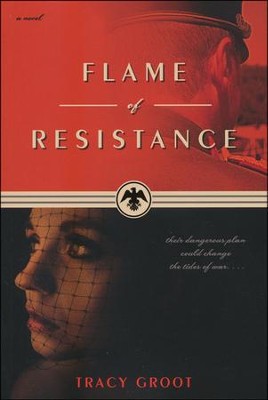
Flame of Resistance  -     By: Tracy Groot
Swiss agents star in these two novels as they first smuggle an important scientist out of Germany and then race through France to rescue the Mona Lisa from German hands.  Suspense and adventure are the main focus, though there is still a touch of romance.

Tracy Groot
Flame of Resistance (2012)*

A tale of French resistance--and retelling of the story of Rahab--in the final weeks leading up to D-Day
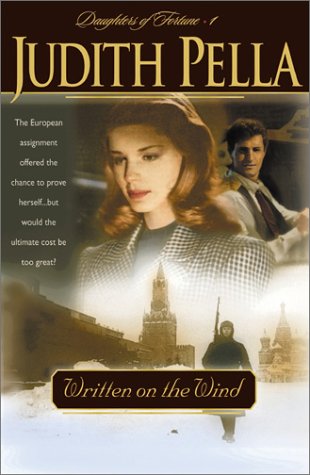
Written on the Wind (Daughters of Fortune #1)
Judith Pella
Daughters of Fortune
1. Written on the Wind (2001)
2. Somewhere a Song (2002)
3. Toward the Sunrise (2003)
4. Homeward my Heart (2004)

Cara Putman 
Stars in the Night (2010)*
Shadowed by Grace (2013)
Stars in the Night
Historical suspense, first on the Home Front in Hollywood and then in Italy. 


Sarah Sundin
Wings of Glory 
1. A Distant Melody (2010)*
2. A Memory Between Us (2010)*
3. Blue Skies Tomorrow (2011)*

Focusing on the Novak family of California, all three sons have joined the air force and battle the Germans over in Europe. 

Wings of the Nightingale
1. With Every Letter (2012)*
2. On Distant Shores (2013)*
3. In Perfect Time (2014)*
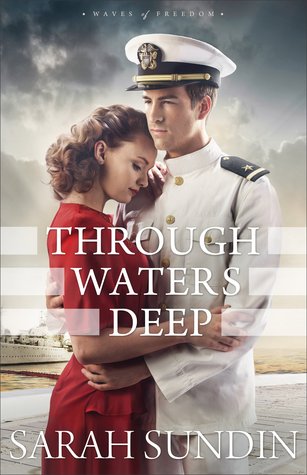
 
Through Waters Deep (Waves of Freedom, #1)Just as the Civil War was the start of a new era for nurses - women as nurses in hospitals! - so WWII put them in a new place: on board aircraft for medical evacuations.  While injured men were being evacuated to hospitals and out of harm's way, nurses tended them to keep them alive on the flight to safety, sometimes hours away.  Sundin's series follows three different flight nurses and their experiences as some of the first women in the air - from the intense training, to the prejudice received, to their incredible mark on history. 


Waves of Freedom 
1. Through Waters Deep (2015)*
The Sea Before Us (Sunrise at Normandy, #1)2. Anchor in the Storm (2016)*
3. When Tides Turn (2017)*

Sundin's next series follows the Avery family, with three naval officers from Boston fighting in the Atlantic during the early years of WWII, and the three women  - a shipyard worker, a pharmacist, and a WAVE (Women Accepted for Volunteer Emergency Service) - with whom they fall in love. 

Sunrise at Normandy
1. The Sea Before Us (2018)*
2. The Sky Above Us (2019)
3. The Land Beneath Us (2020)
Vienna Prelude (Zion Covenant, #1)Three estranged brothers--in three different branches of the service--some together on the shores of Normandy.

Bodie and Brock Thoene
Zion Covenant
1. Vienna Prelude (1989)
Snow on the Tulips  -     By: Liz Tolsma
2. Prague Counterpoint (1989)
3. Munich Signature (1990)
4. Jerusalem Interlude (1990)
5. Danzig Passage (1991)
6. Warsaw Requiem (1991)
7. London Refrain (2005)
8. Paris Encore (2005)
9. Dunkirk Crescendo (2005)
The HomecomingSons of Thunder
Liz Tolsma
Women of Courage
1. Snow on the Tulips (2013)*
2. Daisies are Forever (2014)*
3. Remember the Lilies (2015)

Dan Walsh
The Unfinished Gift (2009)
The Homecoming (2010)
The Discovery (2012)

The first two take place on the Home Front in WWII, while The Discovery is actually a contemporary novel about a young man finding his deceased grandfather's manuscript to a WWII love story, and what he learns through the tale. 

Susan May Warren
Sons of Thunder (2010)
Nightingale (2010)*

Nightingale looks into the American prisoner of war camps in the Midwest - where German soldiers were held right next door to many German immigrants and first generation Americans who still had strong ties to Germany. 

NOVELLA COLLECTIONS
Where Treetops Glisten (2014)* by Tricia Goyer, Cara Putman, and Sarah Sundin - a heartwarming, Christmas-themed collection set in WWII

What other Christian WWII novels do you recommend?

Monday, September 2, 2013

Susan May Warren's "Nightingale"

NightingaleSusan May Warren's Nightingale is a tale of grace and forgiveness.  Esther, a nurse and single mother, is trapped by a sin she committed, trying to atone for it, and unable to feel clean again; Peter, a surgeon, was trapped in a war and is now held prisoner by the side with which he best associates.  They meet through letters first, after Peter tries to save her fiancé Linus as he lay wounded on the battlefield.  Linus passes a letter written to Esther for Peter to mail, and through this strikes up a connection with Esther, who writes back for more details.  Over the letters their friendship grows, though their faults and secrets are hidden until they finally meet in person. 

Warren has a fairly poetical style of writing, which is a nice change after many novels with a more straightforward style.  However, I tend to read quickly - sometimes too quickly - so I occasionally lost track of exactly what was happening due largely to the writing.  There is also a fair amount of jumping back and forth with memories, so it took a moment or two to figure out where I was in the story - present or past. 

This is a mature novel - not that there are scenes of steamy passion, but that it deals with hard subjects, such as a fallen woman trying to make things right.  So many of the characters, from Esther to the wounded soldiers to even Peter at times, lack hope.  And if one lacks hope, how much faith can one have left?  For "faith is being sure of what you hope for and certain of what you do not see" (Hebrews 11:1).  Esther does not believe that she can attain forgiveness for her actions, and so many of the soldiers believe there is no life for them anymore, crippled as they are.  They have lost both hope and faith.  The characters are very flawed, but Jesus came to save such souls as these; His grace proves sufficient. 

Prior to reading this novel, I had not known that during WWII there were prisoner of war camps in Minnesota, Wisconsin, and Iowa, where the German soldiers were held, nor did I give much thought to what happened when the Russians occupied East Germany.

This was a good story, with less-than-well-known but fascinating history behind it, but it is not an easy read - not in the subject matter nor in the writing style.  Nightingale demands one's full attention.  4 out of 5 stars

Friday, August 30, 2013

"On Distant Shores" by Sarah Sundin

The second novel of Sarah Sundin's Wings of the Nightingale series, On Distant Shores, focuses on flight nurse Lieutenant Georgianna Taylor and pharmacist Sergeant John Hutchinson.  Since both have a fiancé back in the States while many friends are pairing up, they form a friendship in Italy while trying to remain true to their loves back home, in spite of the fact that as an officer and an enlisted man, they should not be fraternizing.  Even after months of practice in Africa before the invasion of Sicily and Italy, Georgie still isn't sure she has what it takes to be a flight nurse - she only joined for the sake of her best friend who wanted to be one.  Hutch enlisted in the army so that he could use his pharmacy degree rather than taking an officer position where he couldn't - pharmacists, unlike doctors, could not practice as an officer, as there was no Pharmacy Corps yet - but his striving to be respected as a pharmacist festers in bitterness the longer he must wait to see results. 

On Distant ShoresWhile Georgie is a very loving and caring person, as the baby of the family, she has never really had to make decisions, since there are always people willing to make them for her - which is basically how she ended up a flight nurse anyway.  While her family, fiancé, and friends want what is best for her, they never really let her decide for herself what is best.  Hutch challenges her to look to God and make decisions based on what He wants, not what all the other people in her life want.  God gives us wise and godly people in our lives to help hold us accountable, but we cannot rely on them to make decisions for us - God gave us free will for a purpose. 

While Hutch was following God's will when he enlisted so that he could practice pharmacy and be an example for the nation on why trained pharmacists are needed as officers, he loses sight of God in the process and becomes obsessed with the desire for respect.  He has a degree, so he deserves to be respected; he holds the life of any man receiving medication in his hands, so he deserves respect.  However, he fails to respect his officers, his men, and even his friends, and in the process, he loses their respect also.  It is so easy to lose sight of God in the process of following His will - the moment the goal becomes more important than God is the moment things start to go wrong. 

My one complaint about this novel is that in his pursuit of being chosen as a Pharmacy Corps officer, Hutch becomes unbearably grouchy, and it is really hard to like someone with a continually bad attitude.  Because of that, I liked the first novel a little better.  Otherwise I enjoyed getting to know the characters better after their introduction in With Every Letter, though there were some tough spots to get through; I cried so much during one part - war involves death, and no one involved can be immune to the heartache.  The message is, as usual for Sundin, strong and relevant, the history fascinating, and the plot well-written.  5 out of 5 stars!

Wings of the Nightingale
1. With Every Letter
2. On Distant Shores
3. In Perfect Time

Monday, August 26, 2013

Sarah Sundin's "With Every Letter" - loved every word!

As part of a moral boost in Sarah Sundin's WWII novel, With Every Letter, nurses write anonymous pen pal letters to soldiers with whom they are paired.  Through the program, two lonely people find a secure source of friendship that cannot be influenced by what otherwise holds them back - her exotic looks and foreign upbringing, and his suffering under the stigma of being the son of a famous murderer.  Philomela Blake, known as Mellie, is threatened to lose her position as a med-evac nurse - one of the nurses who takes care of wounded soldiers on the flights to hospitals away from the front - if she cannot make friends and work as part of the team.  As a lieutenant and lead engineer for building airports as the Americans push forward toward Italy, Tom McGilliver needs to be able to lead his men, but his position is also threatened by his lack of authority and respect from his men.  Together, sharing insight on what works for them in the other's place of failure, they build each other up, both in confidence in themselves and in faith in God, never expecting that they would fall in love over their correspondence.

With Every LetterThere is so much growth in this story as Mellie and Gill overcome their failings.  In a plan to avoid becoming his father, Gill tries to lead by showering his men with kindness and compassion, rather than ruling by fear, like so many other officers.  However, kindness only goes so far; he cannot actually control his men, and not just Gill suffers for it - other officers and their men have to pick up the slack.  For an excellent example of authority, Mellie recommends that Gill look to Jesus.  Yes, Jesus was full of compassion and kindness, but he was not afraid to rebuke and discipline, which is what Gill needs to work at. 

Some of what the other nurses say about Mellie is harsh, but it still is true - she has closed herself off from friendship for fear of being hurt.  Like Mellie, so often we're afraid to lay our hearts bare, afraid to be rejected, afraid to feel one more disappointment.  But that attitude neither shows love nor receives love. There is no fear in love; but perfect love casts out fear, because fear involves torment. But he who fears has not been made perfect in love (I John 4:18).  Letting go of fear is hard work, and it takes a lot of practice.  It is no guarantee we will not be hurt - is not Jesus hurt constantly by rejection also? - but it opens us to a much fuller ability to receive and share God's love. 

This is an excellent novel, and I feel enriched having read it.  The Christian lessons and advice are not just "stuck in" to make it a Christian book - it is an integral part of the characters, and they live their faith, imperfect though they are.  Their letters feel real but do not overpower the plot or interactions they have with their peers and each other.  The historical details of the med-evac nurses are fascinating, as well as the exotic settings as the war progresses.  Definitely worth 5 out of 5 stars!

Wings of the Nightingale
1. With Every Letter
2. On Distant Shores
3. In Perfect Time 

Friday, August 23, 2013

Goyer and Yorkey's "Chasing Mona Lisa"

In their sequel to The Swiss Courier, Tricia Goyer and Mike Yorkey send Swiss agents Gabi Mueller and Eric Hofstadler on a mission to Paris and back again, aiding the French Resistance in chasing out the Nazis.  Things seem to be going well for the French, but discord between the Gaullists and the communists is mounting, and another threat is on the horizon: knowing that the Nazis are losing the war, Hermann Goering, famous for his collection of plundered art, decides to snatch the priceless painting Mona Lisa, or as the French call it, La Joconde, as a final blow to the French and potential bargaining chip.  With a Louvre curator pinned under his aide's thumb by blackmail and some unscrupulous Nazi agents to do his dirty work, it should be an easy enough job, but thankfully the American OSS (pre-CIA) in Switzerland is onto the plot.  Thus Gabi and Eric, with the help of the French, take off after the painting, creating a thrilling race to reach her first. 

Chasing Mona LisaWhat I noticed in The Swiss Courier is that Goyer and Yorkey seem to write everything in such a straightforward manner that all of a sudden one is blindsided when an unexpected twist appears.  Since the surprises were "oh duh, I should've seen that coming" moments for me, I figured I just wasn't paying enough attention, so I decided I'd be prepared for Chasing Mona Lisa.

Blindsided again.

It makes sense; it's a supremely intelligent move on their part; I just never saw it coming.  Fool me once, it could well be a fluke; fool me twice, that's good writing.  Congratulations, authors!

One character in particular disappointed me; not in how they were fleshed out, but in choices they make.  Extremism rarely turns out well, and it's hard to watch someone so consumed by a cause that relationships become second-place - there are consequences to shoving away those who love you.  Ending the book the way the authors did was a touch dissatisfying to my happily-ever-after expectations, being a little more bittersweet than I expected.  Suffice to say, I was surprised in more ways than one.  It was a good ending, a realistic ending, and a very fitting ending - but it was no perfect fairy tale ending either. 

I liked the novel a lot; the main strike against it is that like the previous novel, there is not much for a major Christian message - just characters who seem to respect God.  The history is fascinating and plot exciting, and it can stand alone without the first book.  4 out 5 stars

Sunday, August 18, 2013

Goyer and Yorkey's "The Swiss Courier" - a thrilling escape

They had me fooled - more than once.  I can't believe I didn't see it coming!

Tricia Goyer and Mike Yorkey write a brilliant WWII suspense The Swiss Courier, about intelligence agents in Germany and Switzerland working to smuggle a brilliant, naive scientist into Allied hands before the Gestapo capture him.

The Swiss CourierThe novel starts out with seemingly scattered story lines - obviously related, but thus far unconnected.  From our heroine, Gabi Mueller, as she undertakes her first field mission, to Swiss operatives smuggling escaped prisoners across the border, to the young, upcoming scientist Joseph Engel who is unwittingly of Jewish descent, to agents working both sides of the war, and to the evil Gestapo major Sturmbannfuhrer Bruno Kassler.  As the plot winds on, the story lines grow closer and closer together, until they meet in a thrilling climax.  At first it seemed a bit slow, since everything was still fairly scattered, but everything that happens is important for establishing roles, connections, motives, and the final plan of action. 

Suspense and mystery are not synonymous; this is not a mystery, but it is suspense.  We know almost everything of what is going on, so we feel the thrill, the confusion, the danger - the innocent student is busily working on his equations, little knowing that the Allies are forming a plan to smuggle him out, but the Gestapo is about to knock on the door.   And even when it seems everything has been laid out on the table, the authors can still pull one over on the reader!  I was impressed by their ability to write a good suspense while still throwing in a surprise here and there.  I guess that's what makes it a great suspense!

As far as Christian themes go, there was not a lot outside of some of the characters professing Christ; there was no big lesson to be learned or strong message of faith, but at least some of the characters seemed to genuinely rely on God, especially in such uncertain times where the chances of getting caught far exceeded the chances of survival. 

I found the novel to be a thrilling escape from the modern world as the characters eluded Nazis and even their own countrymen.  4 out of 5 stars

Wednesday, August 14, 2013

"Rules of Murder" - A Drew Farthering Mystery, by Julianna Deering

Rules of Murder
In the golden age of detective fiction - the 1920's-1930's - there were certain rules to detective fiction to make it a game for the reader, so that by following the clues the reader competes with the detective  to figure out "whodunit" first.  Among the most famous authors are the esteemed Sir Arthur Conan Doyle (Sherlock Holmes), Dorothy Sayers (Lord Peter Wimsey), and Agatha Christie (Miss Marple and Poirot). 

Ronald Knox, a British priest and theologian who happened to enjoy good mysteries and the odd hoax, penned these Ten Commandments of a detective story:

  1. The criminal must be mentioned in the early part of the story, but must not be anyone whose thoughts the reader has been allowed to know.
  2. All supernatural or preternatural agencies are ruled out as a matter of course.
  3. Not more than one secret room or passage is allowable.
  4. No hitherto undiscovered poisons may be used, nor any appliance which will need a long scientific explanation at the end.
  5. No Chinaman must figure in the story.
  6. No accident must ever help the detective, nor must he ever have an unaccountable intuition which proves to be right.
  7. The detective himself must not commit the crime.
  8. The detective is bound to declare any clues which he may discover.
  9. The "sidekick" of the detective, the Watson, must not conceal from the reader any thoughts which pass through his mind: his intelligence must be slightly, but very slightly, below that of the average reader.
  10. Twin brothers, and doubles generally, must not appear unless we have been duly prepared for them. 


Our author - Julianna Deering - admits to having broken (or at least bent) as many of these rules as possible with her story, Rules of Murder. 


A suitable setting for the cozy mystery genre, the novel takes place in England in the 1930's.  Ellison Andrew Farthering, alias Drew, returns home to his estate to find his mother and stepfather hosting a house party and business meeting, with guests from America arriving the next morning.  While Drew squires his stepfather's American niece, Madeline Parker, about the grounds later on, they stumble upon the dead body of one of the house guests.  Embezzlement, blackmail, and red herrings abound as Drew, his best friend Nick, and Madeline investigate the murder, with the help of the local police.

I should like to point out that while I never skip ahead to read the end of the book, occasionally I do skip ahead to the author's note, if they have one, as it usually includes a bit of historical or otherwise interesting information relating to the book, and usually it doesn't include key plot points to ruin the story.  Thus I found out the importance of Father Knox's Decalogue of detective fiction before reaching the end, and thus was enlightened as to why it featured so prominently in the text.  Naturally other authors have deliberately broken all the rules before, but Deering manages it in a highly amusing and almost satirical way, given Nick's running commentary about it.

Being a mystery and not a suspense, this novel is not written to thrill or to scare, but to lay out sufficient clues to solve the murder yet still hopefully surprise the reader.  I thought myself so clever early on, having caught on to a glossed-over clue, but while it was highly important, I still interpreted it wrong and didn't beat Drew to the murderer.  Good job, Julianna Deering!

Deering's book reminded me of Dorothy Sayers' Lord Peter Wimsey novels: not only is the main character a gentleman larking about, but Rules of Murder begins with the levity so common in many of Sayers' earlier works, and yet like her later novels, the plot sobers as it becomes less a game and more a burden for the characters.  Given the upbeat nature of the majority of the book, I was surprised by how grave it becomes; it lends a greater maturity to the book than I was expecting.  Also, though the murder is solved, the end is not wholly concluded, which befits the start of a series.  I am curious to see what happens next.

Is this a perfect novel?  No, the romance is a bit fast and the spiritual depth a little shallow (though it does leave room for growth in subsequent novels).   But is it a good novel?  Yes.  I cannot agree with the overly harsh editorial review by Publishers Weekly; this book does not deserve such an attack.  It is a solid start to a series, written in much the style of the great mystery writers.  4 out of 5 stars

Who is your favorite detective or mystery writer?


Post Script: for the record, this novel not remotely related to Downton Abbey - it may be the same country, but it is a different decade and a completely different genre.  I like them both, but I would not classify them together.

Drew Farthering Mysteries
1. Rules of Murder
2. Death by the Book
3. Murder at the Mikado
4. Dressed for Death 
5. Murder on the Moor
6. Death at Thorburn Hall